×

The Castell Salmon Farm

The project builds on a historic trout farm, a brownfield aquaculture site, using existing water rights and infrastructure. This approach reduces environmental impact and water use compared to developing untouched land

A First for Germany

Founders Anton Graf von Faber-Castell and Casimir Graf von Wedel have worked closely with local councils, government agencies, fisheries, and stakeholders for several years to make this project possible.

Castell Salmon is the first salmon project in Germany to secure 100% legally binding permits for construction, water use, and environmental impact for a large-scale, land-based salmon farm. This achievement marks the start of a new chapter for sustainable aquaculture in the country.

We dedicate ourselves to delivering premium salmon from egg to plate. Our advanced farming methods ensure we provide fresh, traceable, locally sourced salmon free from antibiotics and microplastics, meeting the highest standards.

Project Milestones

The Project

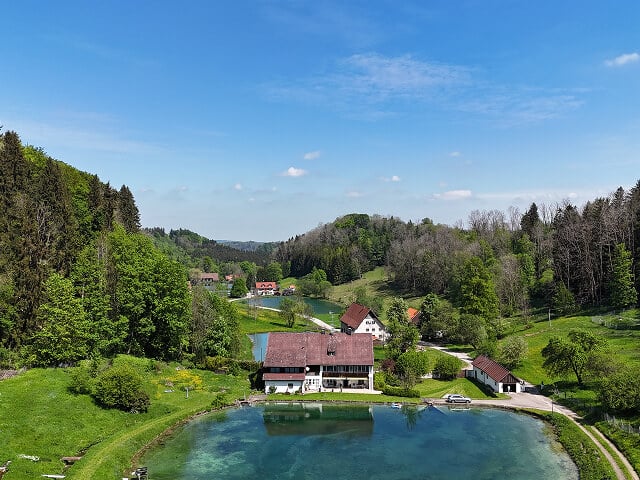
This brownfield project redevelops a long-established flow-through trout farm together with its on-site smokehouse and processing facility in Griestal, Markt Rettenbach, in the Allgäu region of Bavaria, 750 metres above sea level. Both have been in operation for decades, allowing us to improve an existing footprint instead of creating new environmental pressures. No new land or water sources are required. We are reusing pre-existing water rights and infrastructure while significantly reducing water use and environmental impact.

Designed to blend into the surrounding landscape, the new facility will raise salmon in pristine alpine water from our own springs. From the first egg to the packaged product, every stage will take place on site, ensuring complete traceability and consistent quality.

Farming Process

Incubation, hatchery, grow-out, humane harvest, specialty smoking, and distribution.

The system will receive 5 to 6 batches of eggs per year. Fish will reach full harvest size of 4kg within 22 to 24 months.

SUSTAINABLE FUTURE

Technology and Sustainability

The farm will use advanced third-generation Recirculating Aquaculture System (RAS2020) technology. This system recycles water, protects surrounding ecosystems, and maintains optimal conditions for fish year-round. Our unique design also allows precise control over stocking density, placing fish welfare at the centre of operations to ensure healthy, well-raised salmon. The system eliminates the risk of escape into the wild, avoids microplastic contamination, operates without antibiotics, and produces around 40% fewer carbon emissions than conventional sea-cage farming.
Water and Environmental Performance

We benchmark our impact against the German aquaculture guideline DWA-M 777. The new facility will operate within the discharge limits that apply to a small trout farm. At those limits, the system will deliver far higher efficiency while protecting local water.

What this Means

HISTORIC SCALE IN CONTEXT

The historic fish farm is three times larger than a small German trout farm. Matching the small-farm impact on a site of this size marks a significant improvement in water quality over historic operations.

SAME DISCHARGE CLASS, FAR HIGHER EFFICIENCY

Similar to a small trout farm, while producing around 25 times more fish.

70% LOWER WATER INTAKE

Lower intake than the historic farm. That reduction leaves millions of litres of unpolluted water per day in the river.

WATER USE PER UNIT of OUTPUT CUT BY 95%

Each litre of water produces far more fish before being replaced.

DISCHARGE PER UNIT of OUTPUT CUT BY MORE THAN 90%

Output increases while staying within the total permitted load. Reduces pressure on the river.

MODERNISING AN EXISTING SITE WITH ADVANCED CONTROL

Modernising a historic fish farm. No new water rights. No new intake channel. Mechanical filtration, bio-treatment, and final purification return clean water to the river, with continuous outlet monitoring.

Why It Matters

The farm uses less water and returns clean water to the river. Operations protect river quality and run on the same footprint with improved efficiency. Production reaches far higher levels while keeping a fraction of the environmental impact of the site’s historic operations.

SUSTAINABLE FUTURE

Our Commitment

We are committed to producing exceptional salmon without compromise. Our approach combines responsibly sourced German feed, reduced carbon emissions, and ongoing collaboration with leading research and technology partners to improve our methods.

Salmon will be priced in line with other premium organic products on the market, offering top-quality, sustainable, and local fish at a fair premium to ensure accessibility without overpricing.

Building for the Future

Construction is planned to begin in 2026. Once operational, the Castell Salmon Farm aims to be among the leading examples of quality, sustainability, and animal welfare in European aquaculture.

Our construction partner, Dobler, is a 150-year-old family business based in the region. We will involve them and local subcontractors throughout the build.